

Table of Contents
- What to Check Before You Buy JMU Gear
- Understanding Officially Licensed JMU Apparel
- How to Spot Fake College Merchandise
- Identifying High-Quality Screen Printing
- Inspecting Fabric Weight and Texture
- Checking Stitching, Seams, and Construction
- Testing Durability and Longevity
- Frequently Asked Questions
Last Updated: September 18, 2026
What to Check Before You Buy JMU Gear
Before you spend money on JMU apparel, knowing how to verify JMU gear quality makes all the difference. Counterfeit merchandise floods the market, and low-quality items fall apart after a few washes. The good news: you can spot the difference in minutes by checking a few key details.
Purple Nation helps fans, students, and alumni find authentic, high-quality JMU merchandise that lasts. This guide helps you avoid cheap knockoffs and make smart purchasing decisions.
Inspect the tag, fabric, and stitching before you buy, these three steps reveal whether you're getting genuine, well-made gear.
Understanding Officially Licensed JMU Apparel
Officially licensed JMU apparel is manufactured under agreement with James Madison University, which grants licenses only to retailers meeting strict quality and authenticity standards.
Licensed retailers follow strict guidelines for logo color, size, and placement. Counterfeit products ignore these rules, which is why they look slightly off.
Check for the licensing label inside the garment. Official JMU merchandise includes tags that state "officially licensed" or "licensed by James Madison University." The tag should list the manufacturer's name and include care instructions. Fake merchandise either has no licensing label or includes misspelled or blurry text.
Purple Nation carries only officially licensed JMU gear. Every item in our collection meets university standards for quality and authenticity. We offer exclusive designs you won't find elsewhere, from infant and toddler sizes to adult apparel, accessories, and tailgate essentials.
How to Spot Fake College Merchandise
Spelling and printing errors signal counterfeits. Check the university name, mascot, and slogans for typos, official merchandise passes quality control.
Color inconsistencies signal counterfeits. JMU's official purple and gold should be consistent across all products. Faded, overly bright, or mismatched colors indicate poor dye quality.
Blurry or uneven logos indicate low-quality printing. Official screen printing feels smooth and even; counterfeits have rough edges, peeling ink, or visible gaps.
Poor tag quality is an easy tell. Counterfeit tags have thin material with crooked or uneven text. Official tags use sturdy fabric with clear, straight printing.
Suspiciously low prices often signal counterfeits. If an item costs significantly less elsewhere, ask why, counterfeiters undercut legitimate retailers.
No return policy or guarantee is a major warning sign. If a seller won't accept returns or guarantee authenticity, shop elsewhere.
Identifying High-Quality Screen Printing
Screen printing quality separates premium JMU gear from cheap knockoffs. High-quality printing lasts through dozens of washes; poor printing cracks, peels, and fades after a few months.
Feel the graphic. Quality screen printing feels slightly raised and smooth with firm ink adhesion. If it feels rough, thick, or sticky, the quality is poor. Professional flash-curing creates graphics that flex with fabric rather than crack.
Check for color bleeding. Official merchandise has clean, sharp edges where design meets fabric. Counterfeit graphics bleed or have fuzzy borders, indicating wet ink application or coarse mesh, both cost-cutting signs.
Examine ink thickness. Quality printing is opaque and solid without feeling stiff. Hold it to light, you should see fabric through thin design areas but not the main graphic. Overly thick ink cracks immediately; too-thin ink fades within weeks.
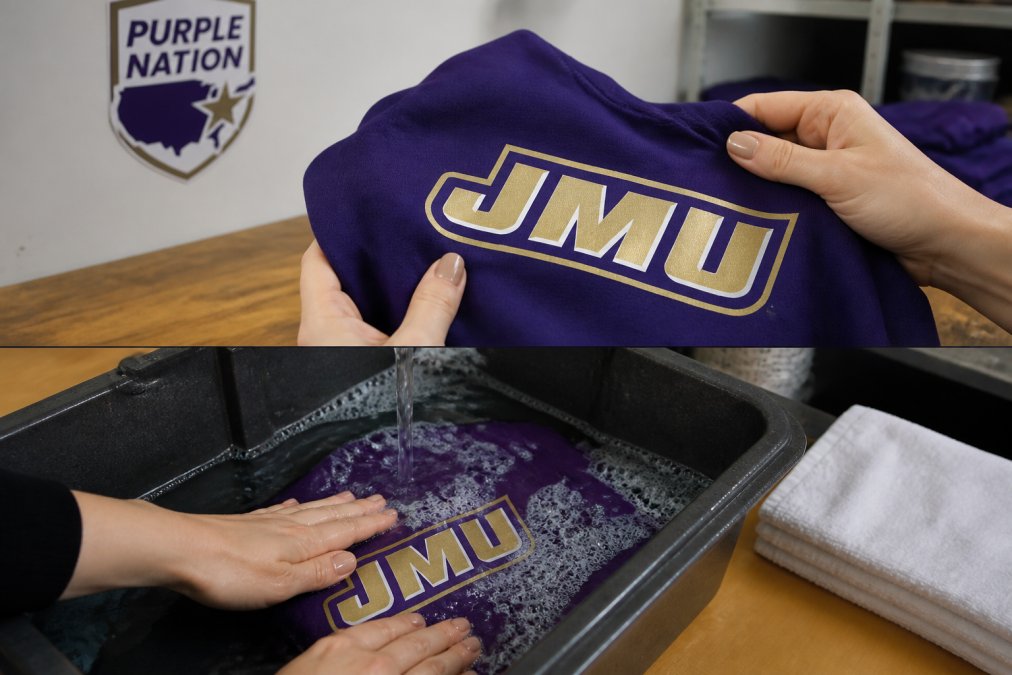
Perform a pre-wash simulation test. Dampen a small corner of the graphic with warm water and gently rub with a soft cloth for 10-15 seconds. Quality printing shows no color transfer or fading. If ink transfers or the graphic lightens, the bond is weak and will deteriorate in washing.
Look for cracking. Bend the printed area gently. Real screen printing flexes without cracking; cheap printing cracks immediately. Repeat 3-4 times in different directions, quality printing shows no white stress lines or ink separation.
Inspect for pilling under the graphic. Low-quality inks trap moisture and cause fabric to pill after a few washes. Check for tiny fiber balls under the design, a sign of poor ink quality that doesn't breathe with fabric.
Test edge adhesion. Run your fingernail along the graphic's outer edge. Quality printing has a clean, sealed edge that doesn't lift. Loose or separating edges will peel during washing, common in counterfeits that skip edge-sealing.
Assess ink type for longevity. Water-based inks feel softer but fade faster; plastisol inks last longer but can crack on stretchy fabric. Official JMU merchandise typically uses high-quality plastisol balancing durability with comfort.
Inspecting Fabric Weight and Texture
Fabric weight and texture reveal garment longevity. Quality JMU merchandise uses substantial fabric, but team apparel comes in two categories, casual and performance, each requiring different quality checks.
Understand the two fabric categories. Casual gear (t-shirts, hoodies) uses cotton or cotton blends; performance gear uses synthetic blends. Casual cotton should feel soft and substantial; performance fabrics should feel smooth and elastic. Don't confuse the two, a stiff performance shirt is correct, but a stiff casual t-shirt is poor quality.
Feel the weight for your category. Quality casual t-shirts weigh 5-6 ounces per square yard; under 4.5 ounces tears easily. For performance wear, weight matters less than stretch recovery, fabric should snap back immediately, not stay loose.
Check the fiber content label carefully. Official merchandise lists exact fiber composition. Cotton-dominant blends (80%+) are softer but pill more easily; polyester-dominant blends (60%+) are more durable but feel less soft. JMU casual wear typically uses cotton-heavy blends; performance gear uses polyester-heavy blends.
Test the texture for your fabric type. Quality material feels smooth and consistent with tight, even weave. Cotton should feel silky; synthetics should feel uniform and slick. Bumpy synthetics or visible knots indicate poor yarn quality.
Perform a stretch-recovery test for performance gear. Stretch gently in all directions. Quality apparel snaps back immediately; slow recovery indicates low or degraded spandex and shape loss. This test is critical for athletic gear but irrelevant for casual cotton.
Look for pilling resistance by fabric type. Cotton-dominant fabrics pill more easily than polyester-dominant ones. Quality cotton resists pilling through tight weaving and higher thread count. Run your hand backward against the grain, quality material shows no pilling; cheap material shows fuzzing.
Assess breathability and moisture-wicking separately. Hold fabric to light, you should barely see through it. Quality casual apparel allows airflow without being see-through. For performance gear, moisture-wicking matters more than breathability. Performance fabrics may feel slightly damp when new (the moisture-wicking coating), this is normal and indicates quality.
Check for color consistency in the weave. Hold the garment at different angles. Color should be uniform throughout. Lighter or darker patches indicate uneven dye application and poor manufacturing control.
Test for shrinkage risk by fiber content. Cotton-dominant fabrics shrink 3-5% unless pre-shrunk; polyester-dominant blends shrink under 1%. Official JMU merchandise should always be pre-shrunk.
Checking Stitching, Seams, and Construction
Stitching quality determines whether a garment falls apart or lasts for years. Poor construction is one of the most common problems with counterfeit merchandise.
Count the stitches. Quality garments have tight, consistent stitching. Fewer stitches or uneven spacing indicate poor construction and seam failure.
Check seam allowance. Quality garments have adequate seam allowance to prevent seams from splitting during wear.
Inspect for loose threads. Turn the garment inside out. Quality construction has clean, finished seams; counterfeits have dangling threads and rough edges.
Look at hem quality. Hems should be straight, even, and firmly stitched. Wobbly or uneven stitching indicates rushed manufacturing.
Test seam strength. Gently pull on a seam. It should not budge.
Testing Durability and Longevity
Perform a wash test. Wash the garment in warm water with normal detergent before committing to a large purchase. Quality gear should show no visible wear after one wash.
Frequently Asked Questions
How can you tell if collegiate apparel is officially licensed?
Officially licensed JMU apparel includes licensing tags or labels from James Madison University or authorized manufacturers. Check the care label for licensing information, look for consistent branding and logos, and verify the retailer's authorization status. Authentic merchandise displays proper stitch density, quality hardware, and professional screen printing or embroidery. Purple Nation carries exclusively licensed JMU gear, so you can shop with confidence knowing your purchase supports the university.
What are the signs of high-quality fabric in fan gear?
High-quality JMU gear features appropriate fabric weight for the garment type, smooth texture without excessive pilling, and natural or quality synthetic blends. Check the fiber content label for transparency, premium apparel lists specific percentages of cotton, polyester, or other materials. Run your hand across the fabric; it should feel substantial and durable. Quality materials resist shrinkage, maintain colorfastness through multiple washes, and retain their shape after wear and laundering.
How do I spot counterfeit university apparel?
Counterfeit JMU merchandise often displays uneven logos, poor stitch density, or misspelled text. Examine the screen printing for cracking, fading, or rough edges, authentic printing is smooth and durable. Check seams for loose threads, uneven spacing, or weak stitching. Fake gear typically uses thin, low-quality fabric and cheap hardware like buttons or zippers that fail quickly. Buy from authorized retailers to ensure you're getting genuine, high-quality JMU apparel backed by proper quality assurance standards.
What should I look for when checking the quality of screen-printed gear?
Quality screen printing on JMU gear features consistent color coverage, crisp edges, and smooth texture. The ink should not crack, peel, or fade after washing. Run your finger over the design, premium printing feels slightly raised but not rough or flaking. Check that the print is properly aligned and centered on the garment. High-quality screen printing maintains vibrant colorfastness through multiple wash cycles and resists moisture-wicking interference, ensuring your JMU pride stays bold and visible.